Instead of beaming down from straight overhead, the sun follows a sideways path through my garden. Or rather, the earth’s rotation and our location further from the equator means it appears the sun’s traverse is slightly diagonal through the sky. Thanks to wooden fences on three sides, one part of the garden is shaded most of the day and the opposite side enjoys direct sunlight, which bounces off the fence behind it to create the ideal location for a succulent bed in our foggy San Francisco neighborhood. Most of the plants and flowers I’ve imported to this space, over the days and years, have adjusted their plant bodies to follow the sun. By this I mean they grow toward it. From my work space window, the entire garden looks like it is leaning to the right.
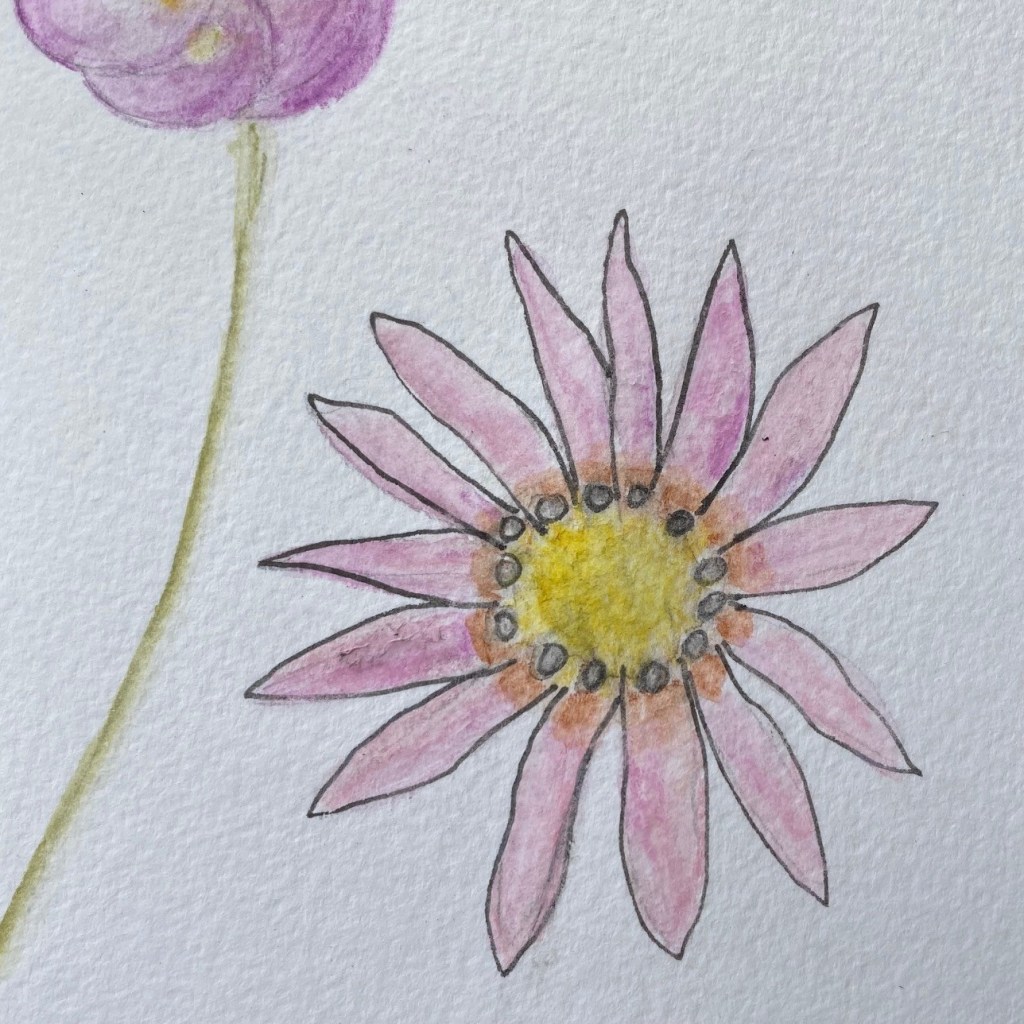
For many plants out back, this tilt is a full commitment. Take the dusty pink flowers with big yellow centers that recently popped up out of the moss-green ground cover: the hundred or so flowers go all in on chasing the sunlight. Their little pink petals cock to the right to get the best position throughout the day, basking in whatever warmth the spring sun provides amidst the fog. At night, they close up their flower shops and wait until dawn to start over again. I waiver between marveling at their ingenuity in getting what they want and thinking it’s slightly pathetic to show so little restraint in making their needs known to everyone else in the garden.
Huge dinner plate succulents look like flowers but are, in fact, brilliant green leaves shaped into gorgeous florets. I brought these coveted, foot-wide plants into the garden a few years ago when I paid five bucks for three stems to a Chinese-speaking woman I found on Craigslist. We could not communicate with words, and yet we both knew I was getting a good deal. Succulents do best in sun and heat, so their success in reproducing and growing over the years is unsurprisingly supported by their growth toward the path of the sun. Unlike spring flowers, the entire plant has positioned itself in a survival lean to catch as much light and warmth as possible. As an unobjective observer, it appears to me that each stem seems to intuitively know what it needs to be its best self, to have the fullest chance at photosynthesis and survival.
There are some plants, though, like the sage my friends gifted me from their thriving community garden plot, that seem untethered to the sun’s pattern in the sky. This sage plant took months to settle into its new home, but is now thriving in the middle of the yard in a tall, white pot I purchased to decorate our wedding venue years ago. There’s no lean, no shift to the right – leaves on the shady side look just as firm and delicious as those on the sunnier side of the pot. I love the fair-weather flowers, and I think of those full, healthy, shady side sage leaves as admirable stoics who didn’t get lucky enough to pop up out of the dirt in direct sunlight, but aren’t willing to show how they’re impacted by their distance from the sun.
As an imperfect gardener, I have likely ignored the little plastic informational sticks from the garden store with scientific plant names and simple caretaking directions like “Full Sun” or “Partial Shade.” Of course, these days, I could download an app and have all of these details at my dirty fingertips. Instead, I prefer to plant each flower or succulent where I want it to grow in the garden and see what happens. This gardening method is not precise, but the concept of surviving where you’re rooted is the throughline in all of my gardening and garden reflections.
And it works out for the most part. Plants, like humans, do best when they have what they need in terms of sunlight and nutrients, but often make do even when they don’t. Think of weeds growing in sidewalk cracks or gorgeous wildflowers blooming unattended along freeways. Or in my case, flowers and succulents figuring out how to maximize sunlight in my foggy backyard alongside that perfect sage plant in its tall white pot. As I write this, they’re in the garden, leaning toward the sun, living, surviving, growing.
 AMBER SHIPLEY